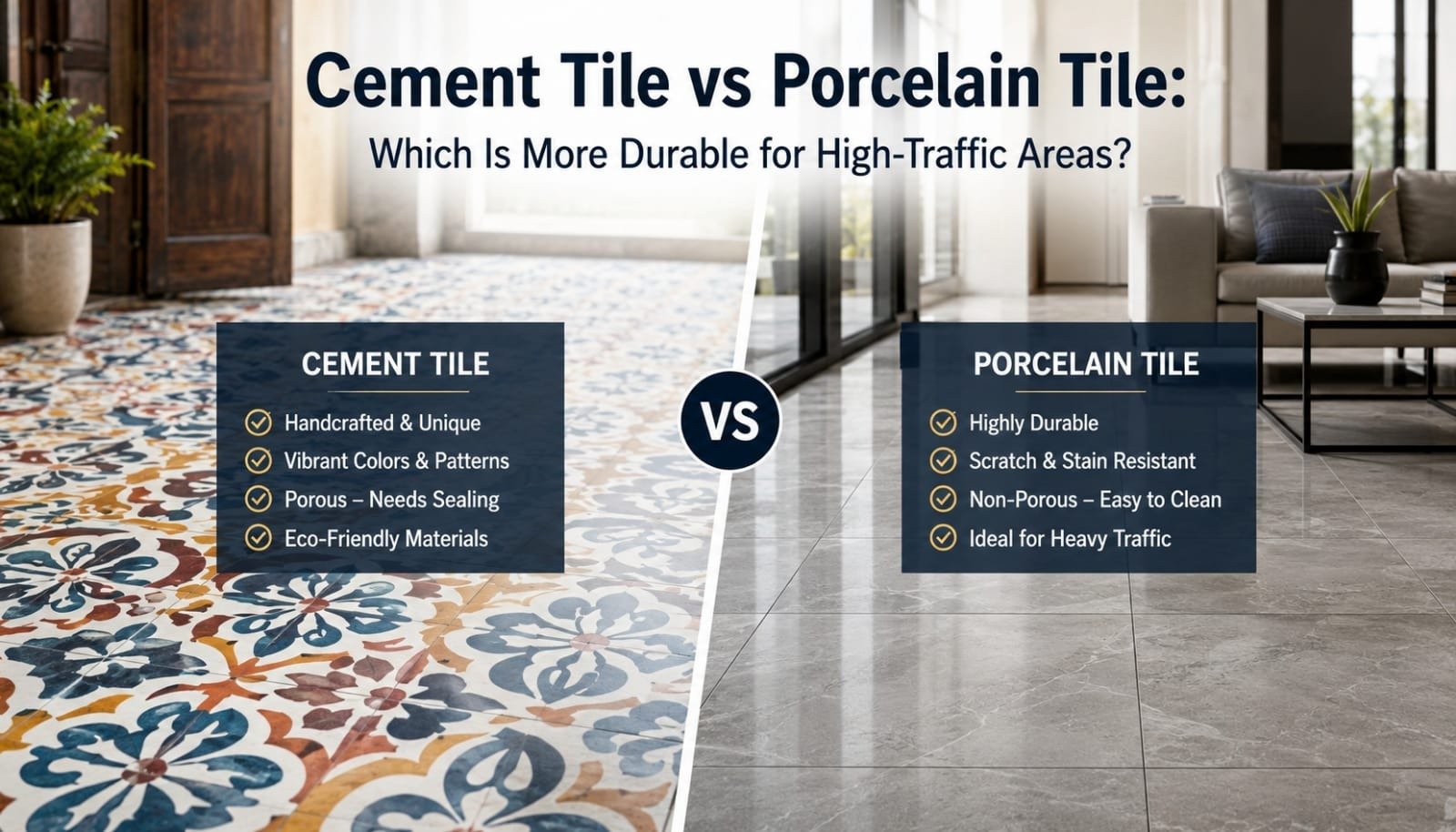
Choosing the right flooring for high-traffic areas requires balancing durability, maintenance, appearance, and long-term value. Among the most popular options are Cement Tile and porcelain tile. Both are known for their strength, but they perform differently under constant foot traffic. Understanding their key differences can help homeowners, designers, and builders choose the best flooring solution for residential or commercial spaces.
Cement Tile vs Porcelain Tile for High-Traffic Areas
Cement Tile is widely appreciated for its handcrafted appearance, rich colors, and decorative patterns. Manufactured using a hydraulic press rather than a kiln, these tiles offer excellent strength and a distinctive aesthetic that complements both modern and traditional interiors. Since Cement Tile is naturally porous, it should be sealed properly to protect against moisture, stains, and everyday wear. Many Cement Tile products are made using natural pigments and sustainable materials, making them an attractive choice for eco-conscious building projects and designs focused on sustainability.
Porcelain tile is produced from refined clay and fired at extremely high temperatures, creating a dense, hard, and non-porous surface. Its low water absorption and excellent stain resistance make it ideal for busy spaces such as kitchens, hallways, retail stores, and commercial buildings. Because of its exceptional durability, porcelain tile is frequently specified for areas with heavy daily traffic.
Durability Comparison
Durability is one of the most important considerations for flooring in high-traffic environments. Cement Tile provides impressive structural strength, but its surface can become scratched or stained if it is not sealed and maintained correctly. In areas where heavy furniture is frequently moved or foot traffic is constant, routine maintenance helps preserve its appearance.
Porcelain tile offers outstanding resistance to scratches, stains, moisture, and impact. Its dense composition allows it to maintain its finish even after years of heavy use. This is one of the main reasons architects and contractors often recommend porcelain tile for commercial buildings and other demanding environments.
Both flooring materials can last for decades with proper installation and maintenance. However, porcelain tile generally requires less protection over time, giving it an advantage where maximum durability is the primary goal.
Maintenance Requirements
Maintenance is another key factor when comparing these flooring options.
Cement Tile requires periodic sealing to maintain its color and prevent moisture penetration. Depending on the amount of foot traffic, resealing may be necessary every few years to keep the surface protected and looking its best.
Porcelain tile is much easier to maintain because of its non-porous surface. It typically requires only routine sweeping and mopping with standard household cleaners. Since sealing is generally unnecessary, porcelain tile is an excellent choice for homeowners and businesses seeking a low-maintenance flooring solution.
For larger construction and renovation projects, maintenance schedules should be considered during the planning stage to ensure long-term flooring performance.
Cost Considerations
The overall cost of flooring depends on both installation expenses and long-term maintenance.
Cement Tile usually has a higher upfront cost because of its handcrafted manufacturing process. Additional expenses for sealing and ongoing maintenance should also be considered. Despite these costs, many homeowners choose Cement Tile because of its unique visual appeal and custom design possibilities.
Porcelain tile is generally more affordable while offering excellent durability and minimal maintenance requirements. Its lower lifetime maintenance costs make it a practical option for large residential and commercial installations where performance and budget are equally important.
When comparing flooring options, it’s important to evaluate the total cost of ownership rather than focusing solely on the purchase price.
Conclusion
Both Cement Tile and porcelain tile are excellent flooring choices for high-traffic areas, but each offers different advantages. Porcelain tile stands out for its superior durability, scratch resistance, and minimal maintenance, making it the preferred option for busy homes and commercial spaces.
On the other hand, Cement Tile delivers timeless beauty, handcrafted character, and unique design flexibility that can significantly enhance interior spaces. If aesthetics and custom design are your priorities, Cement Tile remains an outstanding investment. The best choice ultimately depends on your project’s budget, maintenance expectations, and overall design goals.
About the Author