Alzheimer’s disease presents profound challenges for families as they navigate the complexities of caregiving and emotional adjustment. A family member’s diagnosis often raises numerous questions about what to expect and how to best support their loved one. This article provides families with a comprehensive guide to understanding Alzheimer’s disease, outlining the stages of progression, offering coping strategies, and highlighting valuable resources. By equipping families with this knowledge, they can better manage the journey ahead and make informed decisions to enhance their loved one’s quality of life.
Overview of Alzheimer’s Disease and Its Impact on Families
Alzheimer’s disease is a progressive neurological disorder that affects memory, thinking, and behavior. Its impact extends beyond the individual diagnosed, profoundly affecting family dynamics and daily life. Families often face emotional, financial, and logistical challenges as they adapt to the changing needs of their loved ones. Implementing a Clinical Decision Support System (CDSS) can be beneficial in managing care, as it aids healthcare providers in making informed decisions based on a patient’s medical history and current health status.
As the disease progresses, families may notice a shift in roles, with primary caregivers assuming responsibilities that were once shared. This transition requires effective Care Coordination to ensure that all aspects of the individual’s care are managed seamlessly. Additionally, utilizing a Telehealth Platform can facilitate remote monitoring and provide access to healthcare professionals, easing the burden on family members and ensuring continuous care.
Stages of Alzheimer’s Disease and Their Characteristics
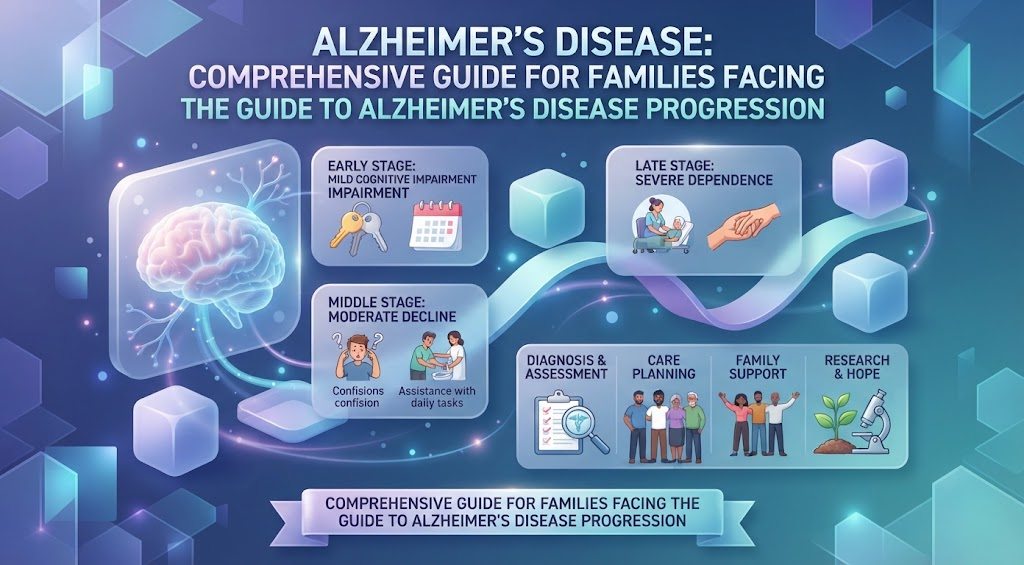
Understanding the stages of Alzheimer’s disease is crucial for families to anticipate changes and prepare accordingly. The disease typically progresses through several stages, each marked by distinct symptoms and challenges. According to the Guide to Alzheimer’s Disease Progression, these stages range from mild cognitive impairment to severe decline.
In the early stage, individuals may experience memory lapses and difficulty with complex tasks. As the disease advances, more pronounced symptoms such as confusion, disorientation, and behavioral changes become evident. During the moderate stage, families might notice increased dependency, prompting the need for more intensive support and possibly engaging in Chronic Care Management (CCM) strategies.
The severe stage is characterized by significant cognitive and physical decline, requiring comprehensive care and support. A Medical Coding Specialist may assist in accurately documenting the condition’s progression, ensuring that appropriate healthcare services are rendered and covered by insurance, particularly under Value-Based Care models.
Coping Strategies for Families Dealing with Alzheimer’s
Families dealing with Alzheimer’s disease can benefit from adopting specific coping strategies to manage the emotional and practical demands of caregiving. One effective approach is engaging in Population Health Management, which focuses on improving health outcomes by addressing the needs of the entire family unit, not just the individual with Alzheimer’s.
Utilization Management is another strategy that can help families optimize healthcare resources and ensure that the care provided aligns with the patient’s needs and preferences. Developing a support network, including healthcare professionals and other caregivers, can offer emotional relief and practical assistance.
Furthermore, families should be proactive in discussing and planning for future care needs. This includes considering the implications of an Advanced Beneficiary Notice (ABN), which informs patients and families about services that may not be covered by Medicare, thus allowing them to make informed financial decisions.
Resources and Support for Families Navigating Alzheimer’s Disease
Families facing Alzheimer’s disease can access a variety of resources to support them throughout the caregiving journey. One valuable resource is a Health Information Exchange (HIE), which facilitates the secure sharing of patient information among healthcare providers, ensuring continuity of care.
Additionally, families can benefit from Patient Navigation services, which guide them through the healthcare system, helping to coordinate appointments and connect with specialized care. Engaging with a Credentialing Verification Organization (CVO) can also ensure that the healthcare professionals involved in their loved one’s care are qualified and trustworthy.
Healthcare Analytics tools can provide insights into care patterns and outcomes, helping families make data-driven decisions about their loved one’s health management. By leveraging these resources, families can enhance their support systems and improve the overall quality of care provided.
Conclusion
Understanding the progression and impact of Alzheimer’s disease is crucial for families as they navigate this challenging journey. By familiarizing themselves with the stages, adopting effective coping strategies, and utilizing available resources, families can provide compassionate and informed care for their loved ones. Empowered with knowledge and support, families can better manage the complexities of Alzheimer’s disease, ensuring the well-being of their loved ones and themselves.
About the Author